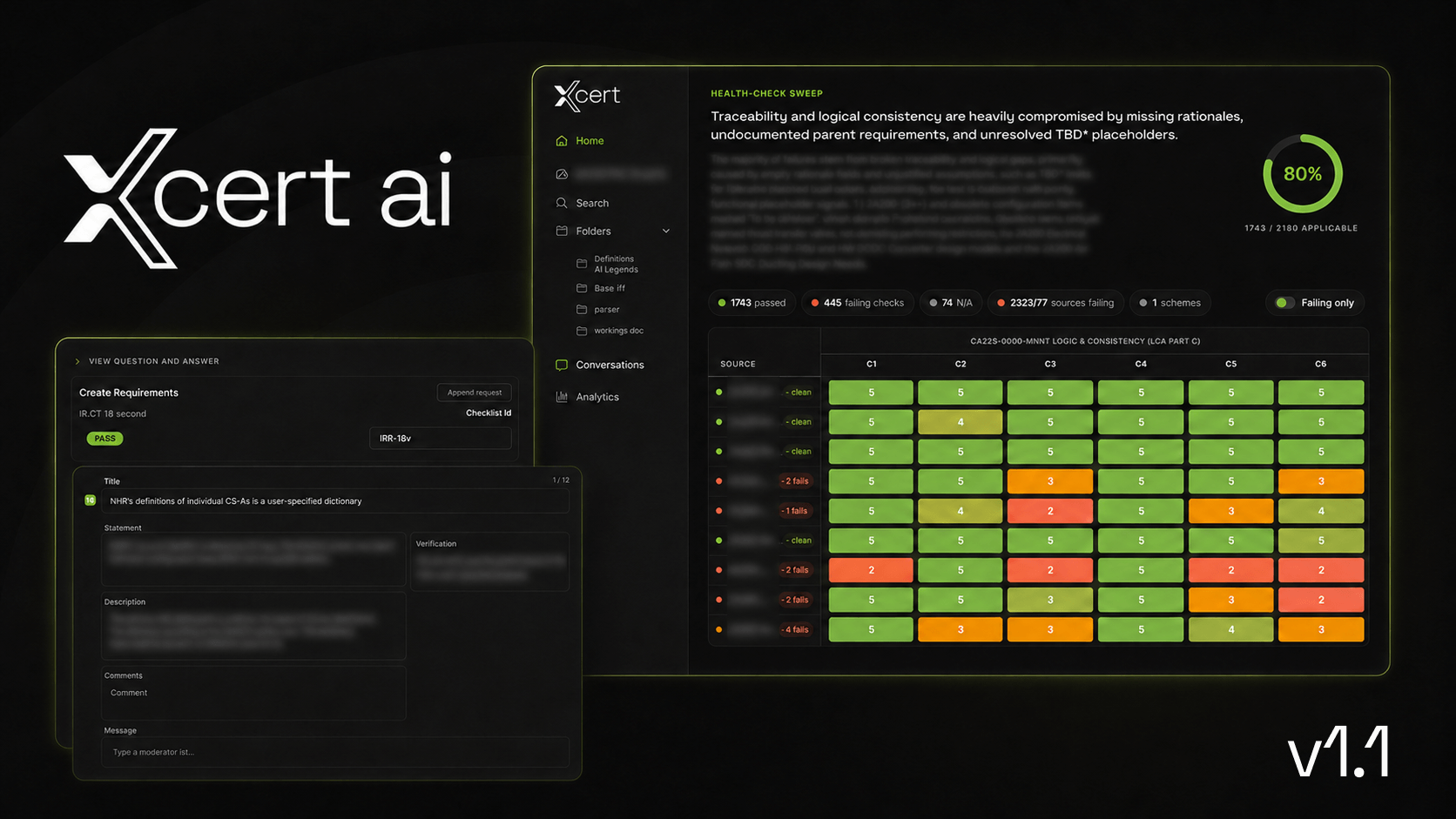
The European Space Agency (ESA) and Xcert AI have announced the first demonstration in applying responsible artificial intelligence technologies to support future space mission operations’ system engineering processes. During a six-month collaboration, teams from ESA and Xcert AI work together to explore using Xcert AI’s AI assisted aerospace system engineering platform to produce thousands of requirements, normally a time consuming and costly activity.
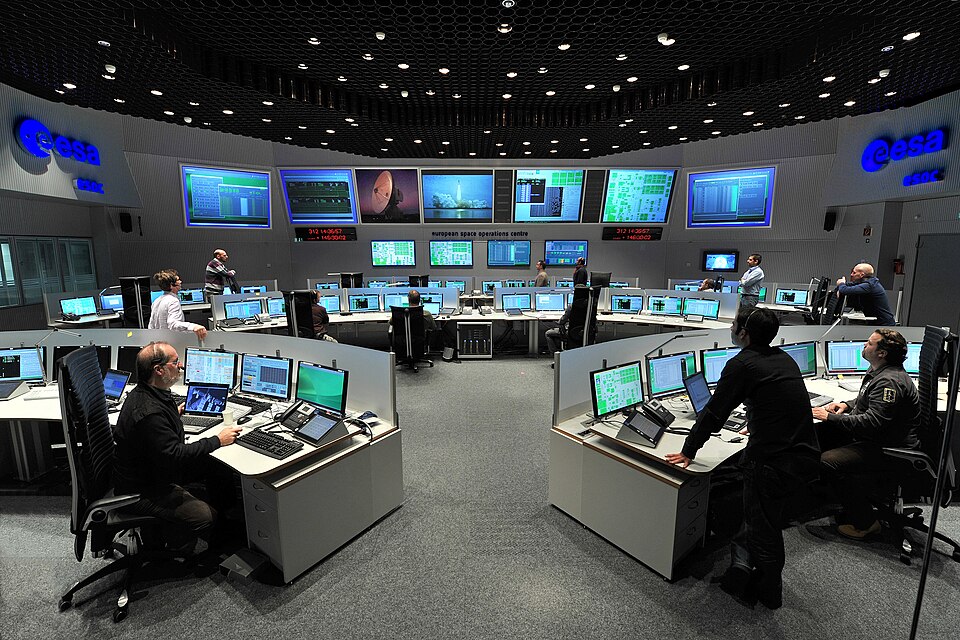
Executed under the umbrella of ESA’s European Space Operations Centre (ESOC), the project focused on evaluating whether Xcert AI could support the generation of formal system and software requirements for Pulse, ESOC’s next-generation Mission Control System. The initiative represents a tangible example of ESA partnering with innovative European startups to accelerate technology adoption while ensuring that safety, transparency and trustworthiness remain central.
Through the collaboration, ESA and Xcert AI demonstrated that locally-hosted language models — fully isolated from external networks — controlled by advanced agentic workflows are capable of generating high-quality requirements comparable to those written by human domain experts. Early measurement campaigns indicate that, with proper calibration and domain-tuning, Xcert AI achieves expert-level output in approximately 50% of cases, marking a significant step toward practical, scalable AI-assisted engineering workflows.
“This collaboration shows the potential of responsible and auditable AI to accelerate the development of critical systems such as Pulse, assisting the engineers while keeping humans firmly in control,” said James Eggleston, the project’s technical officer in ESOC. “Our work with Xcert AI demonstrates that innovation can be pursued without compromising the rigour and reliability required by mission operations.”
“Working with ESA is both an honour and a responsibility,” said Marc-Elian Bégin, CEO and Co-Founder of Xcert AI. “The results demonstrate that local private models — running securely on-premises — combined with aerospace optimised agents can meaningfully assist engineers in complex, regulated domains such as Mission Control Systems. The findings confirm our core belief: AI is most valuable when it augments experts rather than replaces them.”
“This type of collaboration reinforces Europe’s commitment to technological sovereignty,” added Jana Mulačová of the Innovation team in ESOC. “Running AI locally ensures data never leaves the agency’s environment — a fundamental requirement when supporting mission-critical and export-controlled workflows.”
Following the success of the requirements-generation phase, ESA and Xcert AI are exploring further
collaboration toward:
These activities will further explore how responsible AI can reduce engineering effort, increase consistency, and accelerate verification timelines without compromising quality or certification pathways.
The collaboration sets another example for how ESA can engage with emerging European companies to foster innovation and demonstrate responsible use of AI in important system engineering activities.
By validating that private AI systems can support mission engineering work to an expert level while respecting data security and regulatory constraints, ESA and Xcert AI have demonstrated a path towards future operational deployment scenarios.
Xcert AI is a Swiss aerospace AI company developing secure, private, domain-tuned AI systems that support engineering teams in highly regulated industries. Its platform accelerates requirements generation, review and verification while maintaining traceability and compliance-grade transparency.
The European Space Agency provides Europe’s gateway to space. ESA develops and operates the launchers, spacecraft and ground systems needed to further scientific discovery and enable Europe’s presence in space.
Image credit: ESA/Rosetta/NavCam – CC BY-SA IGO 3.0